UESD-FES CONFERENCE PUSHES SCIENCE-BASED SOLUTIONS TO GHANA’S GALAMSEY CRISIS
A Senior Research Scientist at the Council for Scientific and Industrial Research of the Soil Research Institute (CSIR-SRI) in Kumasi, Mr Sadick Adams, says the evidence from mining-affected areas raises serious concerns about food safety, environmental sustainability and public health.
Speaking at the 2026 UESD-FES Stakeholder Conference at Peduase-Aburi in the Eastern Region, on the 22nd to 24th July, 2026, Mr Adams explained that mining-related contaminants could enter the food chain, with prolonged exposure posing potential risks to human health.
He said the problem goes beyond the pollution of rivers because contaminated soils and water resources could affect agricultural production, fisheries, aquatic life and the health of communities that depend on these resources.
Mr Adams, therefore, called for continuous environmental monitoring, stronger scientific research, and greater use of research findings in national policy and decision-making.
According to Mr. Adams, scientific evidence showing the accumulation of heavy metals in soils, water bodies, crops and aquatic ecosystems has intensified calls for urgent and coordinated action against illegal mining in Ghana.
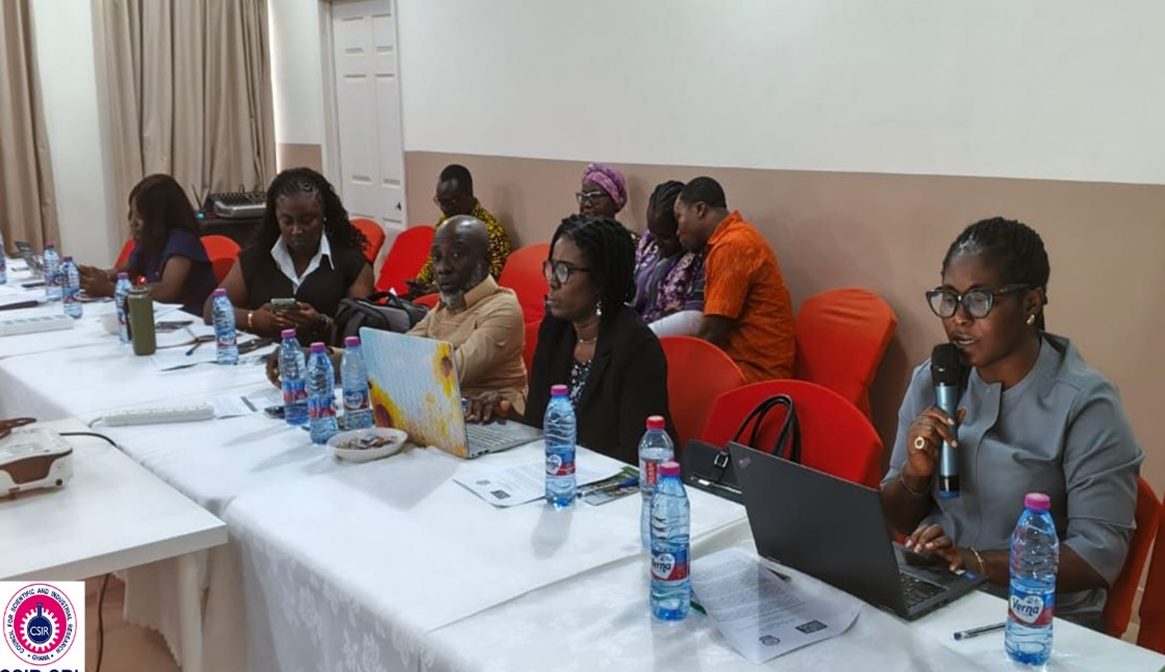
The two-day conference was organised by the University of Environment and Sustainable Development, UESD, in partnership with the Friedrich-Ebert-Stiftung, FES, Economic Policy Competence Centre.
It was held on the theme “Galamsey, Environmental Contamination and Food Poisoning in Ghana: A Multi-Stakeholder Perspective”.
The conference brought together scientists, policymakers, academics, environmental experts, development practitioners and other stakeholders to examine how scientific evidence can be translated into practical solutions to Ghana’s illegal mining crisis.
Participants warned that the impact of galamsey is no longer limited to degraded lands and polluted rivers but increasingly threatens the country’s food systems and public health.
Professor Gibrilla Abass of the Department of Water Resources and Aquaculture Management said the effects of illegal mining cut across several sectors, including water resources, forests, agriculture, fisheries, food safety and public health.
He said the interconnected nature of the problem means no single institution can address it alone.
Professor Abass, therefore, called for a coordinated response involving government agencies, scientists, universities, research institutions, mining communities, traditional authorities, civil society organisations and development partners.
He also called for greater investment in research and innovation, environmental restoration and sustainable mining practices.
The vice-chancellor of UESD, Professor Eric Nyarko-Sampson, also described galamsey as one of Ghana’s most pressing environmental, public health and socio-economic challenges.
His address was delivered on his behalf by the Head of the Research and Innovations Unit, Professor Felicia Annin.
Professor Nyarko-Sampson said the contamination of soils, rivers, crops and aquatic ecosystems requires a coordinated national response backed by credible scientific evidence, effective governance and sound public policy.
He said universities and research institutions have an important role to play in generating evidence, informing policy and developing innovative solutions to restore degraded ecosystems.
He, however, stressed that environmental restoration must also consider the livelihoods of communities that depend on natural resources for survival.
Professor Nyarko-Sampson therefore called for stronger collaboration among government, universities, research organisations, civil society, traditional authorities, development partners and local communities.
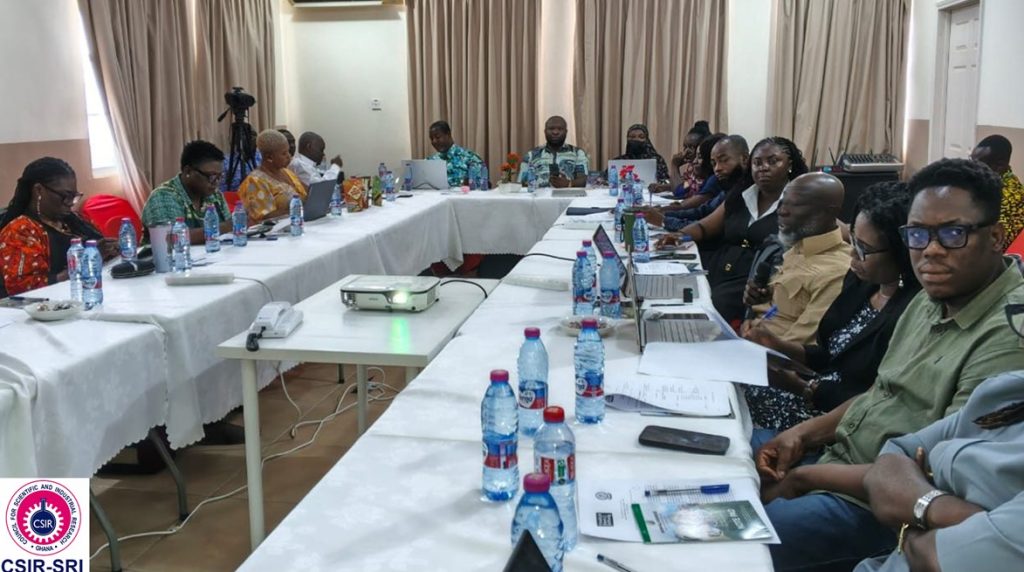
Delivering the keynote address, the Dean of UESD’s School of Sustainable Development, Professor Anthony Amoah, said Ghana must address both the environmental consequences of illegal mining and the economic conditions that encourage people to engage in the activity. He acknowledged the contribution of artisanal and small-scale mining to employment, household incomes and Ghana’s gold economy, but warned that poorly regulated mining continues to cause significant environmental and social damage.
Professor Amoah said some previous interventions have achieved limited results because of their heavy focus on enforcement without adequately addressing the economy or the realities of mining communities.
As an alternative, he proposed the Integrated Sustainability Action, or ISA Model, which seeks to combine environmental protection, effective regulation and sustainable livelihoods.
Under the proposed framework, local miners would be organised into formal cooperatives, foreign participation in small-scale mining would be restricted, and responsibility for reclaiming degraded lands would be clearly assigned.
The model also proposes stronger monitoring, accountability and enforcement.
Professor Amoah said enforcement and livelihoods should not be treated as competing priorities.
He argued that Ghana could address both through an integrated approach that protects the environment while promoting food security and inclusive economic development.
A panel, moderated by Professor Michael Tuffuor, the Head of the Department of Sustainable Development and Policy, examined some of the institutional challenges affecting Ghana’s fight against illegal mining.
The panel included Mr Tweneboah Koduah of the National Development Planning Commission, Ms Winner Wendy Anane of Rocha Ghana and Dr Theodora Akweley Asiamah of UESD.
The panellists identified weak and inconsistent implementation of existing laws as a major obstacle to efforts to control illegal mining. They called for stronger political commitment, greater institutional accountability, better coordination among regulatory agencies and increased investment in intelligence-led enforcement. They also advocated greater involvement of traditional authorities and mining communities in efforts to address the problem.
During the broader stakeholder discussion, moderated by Professor Daniella Delali Sedegah, participants again identified weak enforcement as a major concern. They said tackling galamsey requires more than periodic crackdowns and short-term interventions.
Participants called for a sustained national strategy that combines effective law enforcement with scientific research, alternative livelihoods, community participation, environmental restoration and political commitment.
The conference also challenged universities and research institutions to ensure that scientific findings are not confined to academic circles.
Instead, participants want research evidence translated into practical policies and interventions that protect communities and restore degraded environments.