CSIR-SRI Strengthens Proposal Writing Skills to Enhance Research Funding Competitiveness
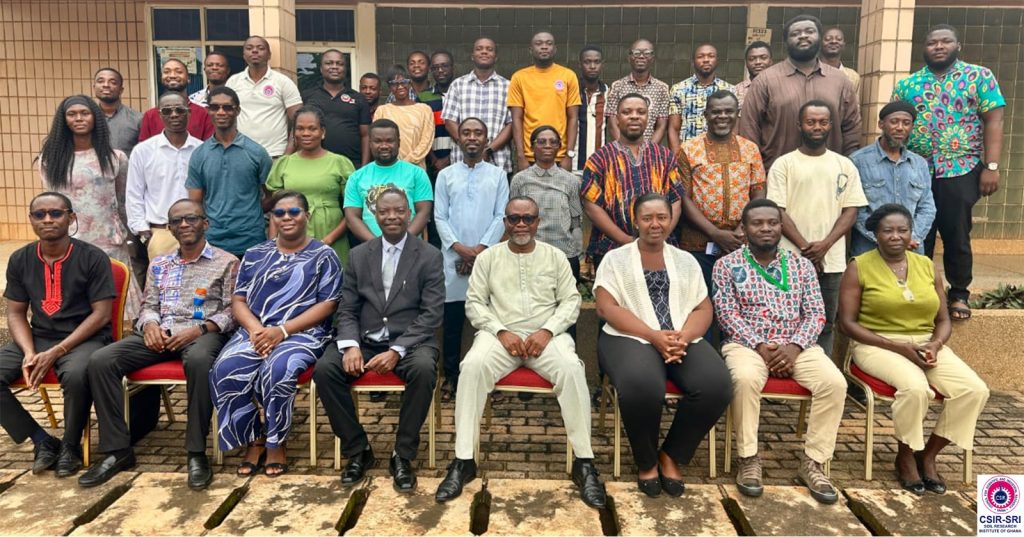
The CSIR-Soil Research Institute (CSIR-SRI) in Kumasi has reaffirmed its commitment to advancing research excellence by organizing a 2-day proposal development workshop on the 15th-16th of July, 2026, an event aimed at equipping its scientists and staff with the knowledge and practical skills required to develop competitive research proposals capable of attracting national and international funding.
The workshop also provided a platform for participants to collaboratively develop an institutional proposal for a national soil dashboard and information system that will improve access to reliable soil information for sustainable agriculture, climate resilience and evidence-based decision-making in Ghana.
Welcoming participants, Dr. Robert Brenya, a research scientist at CSIR-SRI, described the workshop as an important investment in strengthening the institute’s research competitiveness. He encouraged participants to transform innovative ideas, scientific discoveries and research questions into high-quality, fundable proposals that address national development priorities and attract strategic partnerships.
Dr. Brenya introduced the resource person, Dr. Edward Yeboah, a former director of CSIR-SRI, a renowned soil scientist and an experienced proposal development expert, who facilitated the two-day workshop.
In his presentation, Dr Yeboah emphasized that robust soil information systems are essential for improving soil health, enhancing food security and supporting climate change adaptation and mitigation efforts. He noted that although Ghana has established platforms such as the Ghana Soil Information System (GhaSIS), Soil Nutrient Road Maps (SNRM) and the African Union Soil Observatory, many of these systems have significant limitations, including inadequate integration of climate and crop yield data, limited crop-specific information and insufficient protection against digital misuse.
He further highlighted a major institutional challenge confronting CSIR-SRI, the fragmentation of valuable soil data across individual researchers’ computers rather than within a centralized institutional repository. According to him, the lack of an integrated data management system limits the Institute’s ability to respond promptly to funding opportunities, strengthen research collaborations and provide timely, reliable soil information to farmers, policymakers, extension officers, fertilizer companies and other key stakeholders.
Throughout the workshop, participants were guided through the essential components of competitive proposal development, including problem identification, proposal structuring, objective setting, literature review, conceptual framework development, research methodology, budgeting, project scheduling and strategies for meeting donor expectations.
Interactive discussions also enabled participants to examine critical institutional challenges affecting soil data management, including fragmented datasets, the absence of a centralized data repository, inconsistent harmonization of analytical procedures, inadequate georeferencing of legacy datasets, and the need for clear institutional policies on data ownership and accessibility. Participants agreed that addressing these challenges would significantly strengthen research collaboration, improve institutional efficiency and enhance the quality and accessibility of soil information to support Ghana’s agricultural sector.
On the second day of the workshop, Dr. Collins Tay, Director of CSIR-SRI, described proposal writing as one of the most critical skills for today’s researchers. He noted that the increasingly competitive global research environment requires scientists to continuously develop high-quality proposals capable of attracting funding and building long-term strategic partnerships.
Dr. Tay encouraged participants to position themselves and the Institute as credible partners for international collaborations by demonstrating technical excellence, innovation and strong institutional capacity.
The workshop also featured practical sessions on equitable international research partnerships, during which participants explored strategies for negotiating fair roles, authorship, governance structures and funding arrangements in collaborative research projects. Working in groups, they developed sections of the proposed institutional soil dashboard project and presented their work for peer review and expert feedback.